
The following analysis examines whether 304 stainless steel qualifies as a premium material from multiple dimensions—including core properties, performance advantages, applicable scenarios, and identification methods.
Is 304 stainless steel good quality?
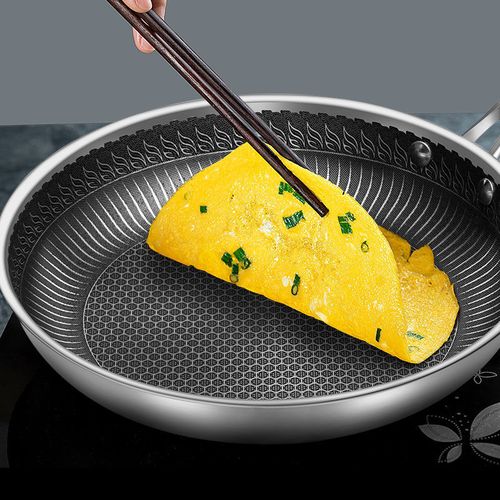
Micro-Nano Level Hydrophobic Physical Non-Stick Technology (Distinct from Ordinary Polishing)
304 stainless steel offers exceptionally reliable quality and stands as one of the most widely used general-purpose stainless steel grades today.
Its core quality advantages are reflected in three key aspects:
① Exceptional corrosion resistance. Its classic composition of 18% chromium and 8% nickel provides robust protection against air, water, and weak acids/alkalis (such as common cleaning agents and rainwater), making it highly resistant to rust.
② Superior mechanical properties. Balanced strength, toughness, and ductility enable processing through stamping, bending, welding, and other methods without deformation or fracture.
③ High stability. Maintains consistent performance at room temperature without leaching harmful substances, meeting food contact safety standards.
Does 304 stainless steel have any shortcomings? In which scenarios is it unsuitable?
304 stainless steel offers excellent quality but is not a universal solution.
① Limited resistance to high-chlorine environments. Prolonged exposure to high concentrations of chloride ions (e.g., seawater, pool water, chlorine-based disinfectants) may still cause pitting corrosion.
② Maximum high-temperature resistance is approximately 800°C. Exceeding this temperature causes oxidation of chromium and nickel elements, reducing corrosion resistance.
③ Insufficient resistance to strong acids (e.g., concentrated sulfuric acid, nitric acid) and strong alkalis (e.g., concentrated sodium hydroxide).
Therefore, in specialized settings like coastal areas or chemical plants, 316 stainless steel (with superior chlorine resistance) should be selected instead of relying solely on 304 stainless steel quality.
II. Performance and Quality Correlation: Detailed Explanation of 304 Stainless Steel Quality
How rust-resistant is 304 stainless steel? Will it rust during everyday use?
304 stainless steel offers mid-to-high-end rust resistance, rarely rusting under normal daily use.
Its rust-proofing relies on the passivation film (chromium oxide layer) forming on its surface. As long as this film remains intact, it effectively blocks corrosive agents.
However, note that prolonged exposure to humid, poorly ventilated environments or contact with salt/chloride ions (e.g., coastal living, frequent use of chlorine-based cleaners) may compromise the passivation layer.
This may result in minor rust spots, typically superficial surface rust that can be wiped away.
Therefore, the rust resistance performance of 304 stainless steel directly correlates with its usage environment and maintenance practices.
Is the load-bearing/compressive strength of 304 stainless steel reliable? Is it suitable for structural components?
The mechanical properties of 304 stainless steel meet the requirements for most general applications, offering dependable load-bearing and compressive performance.
However, it is not recommended for heavy-duty structural components (such as main building beams or load-bearing parts in large machinery).
With a yield strength of approximately 205 MPa and tensile strength ranging from 485 to 655 MPa, it is suitable for light to medium-duty load-bearing components like shelving, guardrails, furniture frames, and small mechanical parts.
For heavy-duty applications or high-temperature/high-pressure environments, opt for 304H (high-temperature strengthened grade) or other high-strength stainless steels. Avoid relying solely on standard 304 stainless steel for such demands.
Is the load-bearing/compressive strength of 304 stainless steel reliable? Is it suitable for structural components?
The mechanical properties of 304 stainless steel meet the requirements for most general applications, offering dependable load-bearing and compressive performance.
However, it is not recommended for heavy-duty structural components (such as main building beams or load-bearing parts in large machinery).
With a yield strength of approximately 205 MPa and tensile strength ranging from 485 to 655 MPa, it is suitable for light to medium-duty load-bearing components like shelving, guardrails, furniture frames, and small mechanical parts.
For heavy-duty applications or high-temperature/high-pressure environments, opt for 304H (high-temperature strengthened) or other high-strength stainless steels. Avoid relying solely on standard 304 stainless steel.
Is food-grade 304 stainless steel quality assured? Can it directly contact food?
Food-grade 304 stainless steel compliant with national standards is fully quality assured and safe for direct food contact.
Food-grade 304 stainless steel must meet two core quality requirements:
① Elemental content compliance (Cr ≥ 18%, Ni ≥ 8%, C ≤ 0.07%);
② Heavy metal (lead, cadmium, arsenic) migration levels conforming to GB 4806.9-2016 standards.
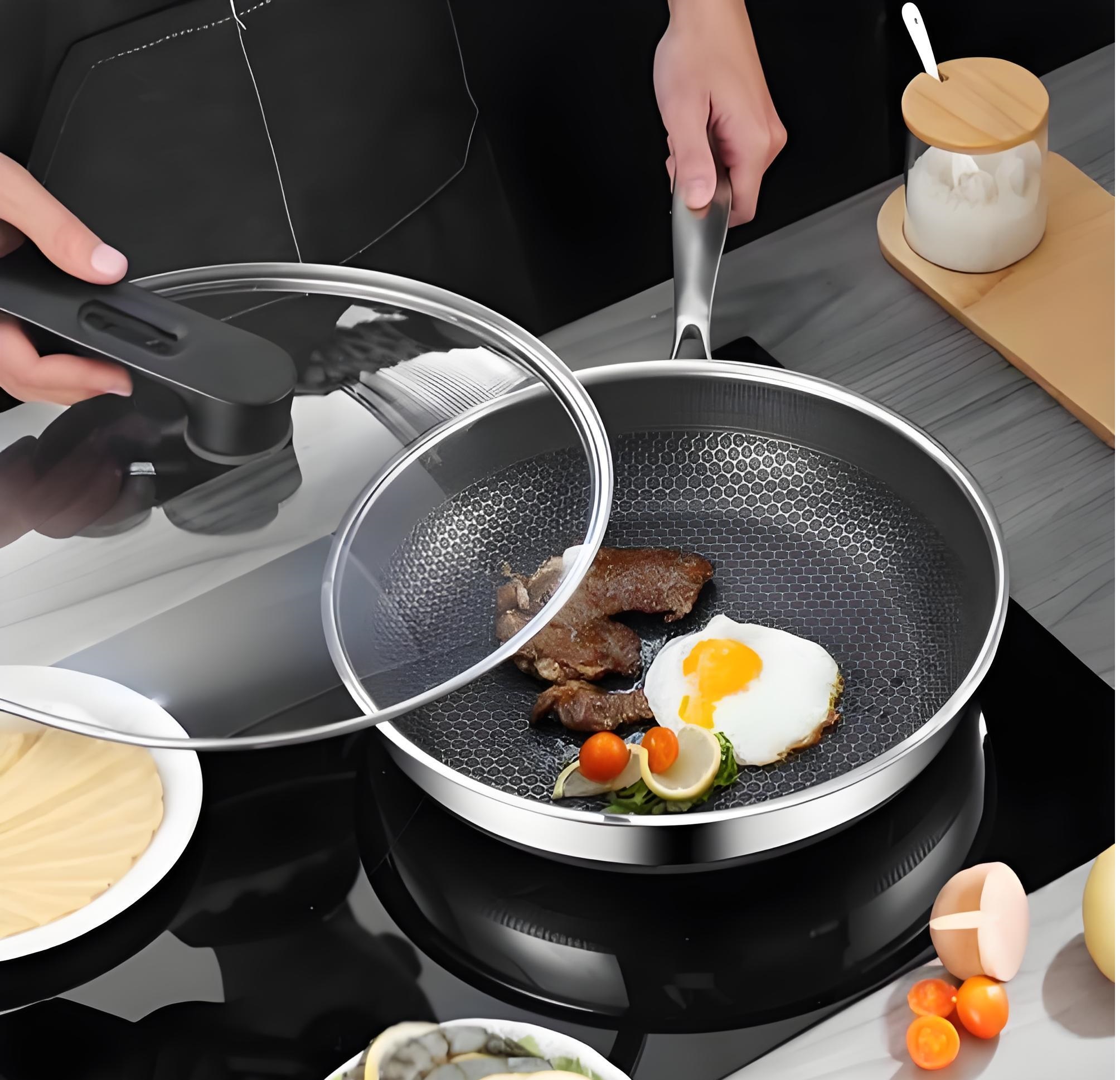
This grade of 304 stainless steel undergoes rigorous quality testing and is commonly used in tableware, kitchenware, and food processing equipment, ensuring safety concerns are unnecessary.
However, caution is warranted regarding “counterfeit 304” (low-chromium, low-nickel materials), which fail to meet quality standards and may leach harmful substances.
III. Selection and Identification: How to Ensure You Purchase High-Quality 304 Stainless Steel?
There are indeed cases where 201 stainless steel is passed off as 304 stainless steel on the market. You can identify quality using these 4 methods:
① Check the steel stamp. High-quality 304 stainless steel products will be marked with “304,” “SUS304,” or “06Cr19Ni10” (national standard designation).
② Use a testing solution. Apply 304 stainless steel testing solution. If it does not change color, the quality meets standards; if it turns red, it is counterfeit.
③ Test magnetism. 304 stainless steel is austenitic and typically non-magnetic or weakly magnetic. Strong magnetism indicates it’s likely 201 stainless steel (ferritic, highly magnetic).
④ Verify certificates. Request material test reports (e.g., spectral analysis reports) to confirm elemental composition meets 304 standards and avoid substandard products.
How to choose between 304, 201, and 316 stainless steel based on quality?
The core quality differences among these grades lie in corrosion resistance, chemical composition, and suitable applications, with corresponding variations in cost-effectiveness.
Regarding corrosion resistance:
201 stainless steel performs the worst. Its nickel content ranges only from 3.5% to 5.5%, with manganese added in large quantities to replace nickel and reduce costs.
This results in poor passivation film stability, making it prone to rusting in humid environments or upon contact with mild acids/alkalis. It is only suitable for dry indoor environments.
304 stainless steel offers good corrosion resistance. Its classic composition of 18% chromium and 8% nickel withstands weak acids, alkalis, rainwater, and common cleaning agents in everyday settings, making it a versatile choice.
316 stainless steel offers the highest corrosion resistance. By adding 2%-3% molybdenum to the 304 base composition, it effectively withstands high chloride environments (e.g., seawater, chlorine-based disinfectants) and strong acids/alkalis, making it the preferred choice for extreme conditions.
Regarding application scenarios:
201 stainless steel suits budget-constrained applications with no corrosion resistance requirements. Examples include indoor decorative components in dry environments and low-cost furniture frames.
Priced at only 60%-70% of 304 stainless steel, it offers less consistent quality.
304 stainless steel covers the vast majority of everyday scenarios. Whether for food-contact kitchenware and tableware or indoor/outdoor railings, shelving, and appliance components, its quality meets requirements. It offers a mid-to-high level of cost-effectiveness.
Due to its higher cost (approximately 1.5-2 times that of 304), 316 stainless steel is better suited for specialized environments like coastal areas, chemical workshops, and medical equipment.
It also boasts superior high-temperature resistance, withstanding temperatures up to 870°C—far exceeding the 800°C limit of 304 stainless steel.
In summary:
– For “practical, reliable quality” in everyday applications (cookware, railings, shelving), choose 304 stainless steel.
– For harsh environments (high humidity/chlorine, strong acids/alkalis), select 316 stainless steel.
– If budget is limited and use is confined to dry indoor decor, 201 stainless steel is an option—though its inferior corrosion resistance is a trade-off.
IV. Usage and Maintenance: How to Extend the Service Life of 304 Stainless Steel?
Follow these 3 steps to extend its service life:
① Avoid prolonged contact with high-chlorine substances (e.g., saltwater, chlorine-based disinfectants). Rinse thoroughly with clean water after use.
② Maintain ventilation and dryness; avoid prolonged exposure to damp, dark environments (e.g., under kitchen sinks—ensure regular airflow);
③ Prevent sharp objects from scratching the surface (damaged passivation film accelerates rusting). Clean with soft cloths and neutral detergents—never use steel wool or abrasive tools.
With proper care, 304 stainless steel can last over 10 years.
Does rust on 304 stainless steel indicate poor quality? How should it be handled?
It isn’t necessarily a quality issue. Most rust spots are “surface rust” (iron oxide adhering from the environment), not rust originating from the material itself.
① Mild rust spots: Wipe with white vinegar and a soft cloth, or use a specialized stainless steel rust remover. Rinse thoroughly with water and dry afterward.
② Stubborn rust spots: If rust penetrates the surface (pitting corrosion), it may indicate substandard material (e.g., counterfeit 304) or prolonged exposure to harsh conditions. Replace the product.
If newly purchased 304 stainless steel develops severe rust within a short period, it is likely a quality issue (e.g., low chromium/nickel content). You may seek compensation with a testing report.
V. Finally
However, note the following:
① Avoid use in special environments (high chlorine, strong acids);
② Carefully verify authenticity when purchasing to avoid counterfeit 304 (substandard quality);
③ Perform routine maintenance to preserve the surface passivation layer.
When used appropriately, authentic, and properly maintained, 304 stainless steel fully meets the needs of most users.